Fade clippers and general-purpose clippers overlap, but blade geometry and adjustment range influence how easily a barber creates close transitions. The label on the box matters less than the actual blade and lever configuration.
What makes a fade clipper useful?
A fade-oriented blade can make short-length blending and close scalp work more manageable. A smooth taper lever allows small length changes between guard sizes. Neither feature replaces proper technique: consistent wrist movement, light pressure and careful sectioning are essential.
When a regular clipper is enough
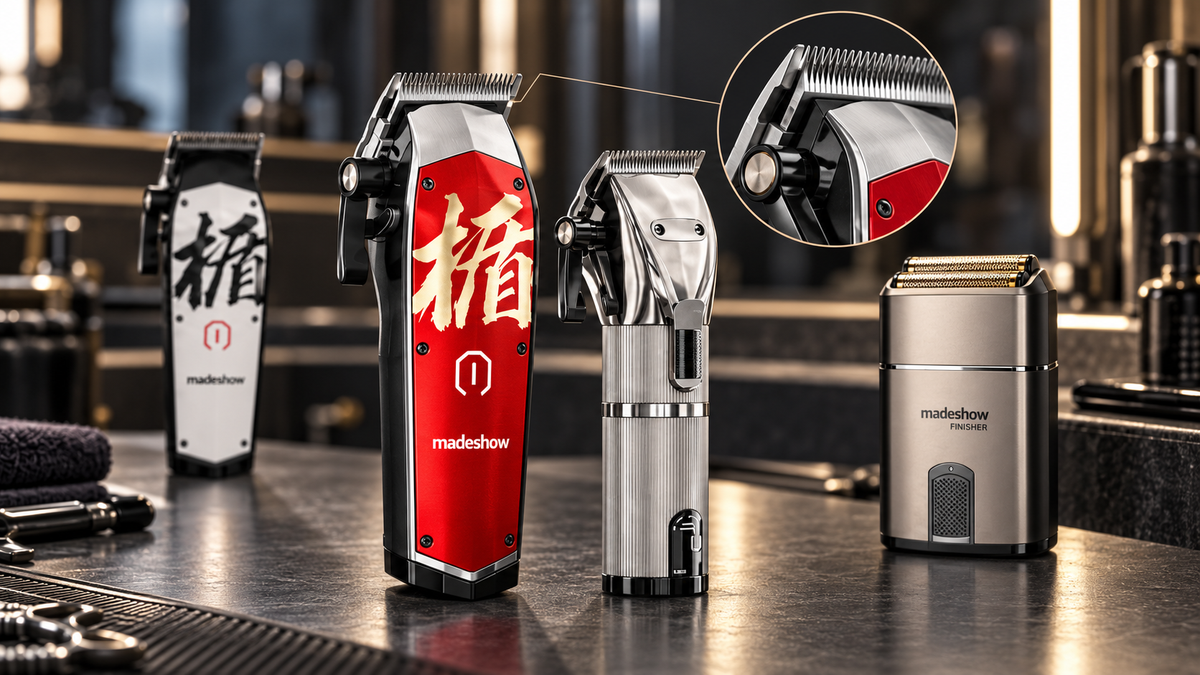
For routine short back-and-sides cuts, all-over trims and bulk removal, a reliable cordless clipper with suitable guards may be all you need. For skin fades, many barbers combine a clipper, a detail trimmer and a foil shaver, using each tool for its intended stage.
A practical fade workflow
- Establish the shape and remove bulk with an appropriate guard.
- Create a guide at the desired fade height using a suitable short setting.
- Blend progressively using guard changes and small lever adjustments.
- Refine visible lines with controlled corner work.
- Finish the neckline and edges with a trimmer; use a foil shaver only where appropriate.
For professional options, see the Madeshow M8F and WMARK NG-X1.
Frequently Asked Questions
What is the main difference between fade clippers and regular clippers?
Blade geometry and adjustment range affect close blending. Taper-lever control and how the tool fits your workflow matter as well.
Can a regular clipper be used for fades?
Yes. General-purpose clippers overlap with fade clippers, although a fade-oriented blade can make close blending easier.
Do beginners need a fade-specific clipper?
Not necessarily. Good guards, a predictable lever and practice are more important at the start.
Does zero-gap mean a better fade?
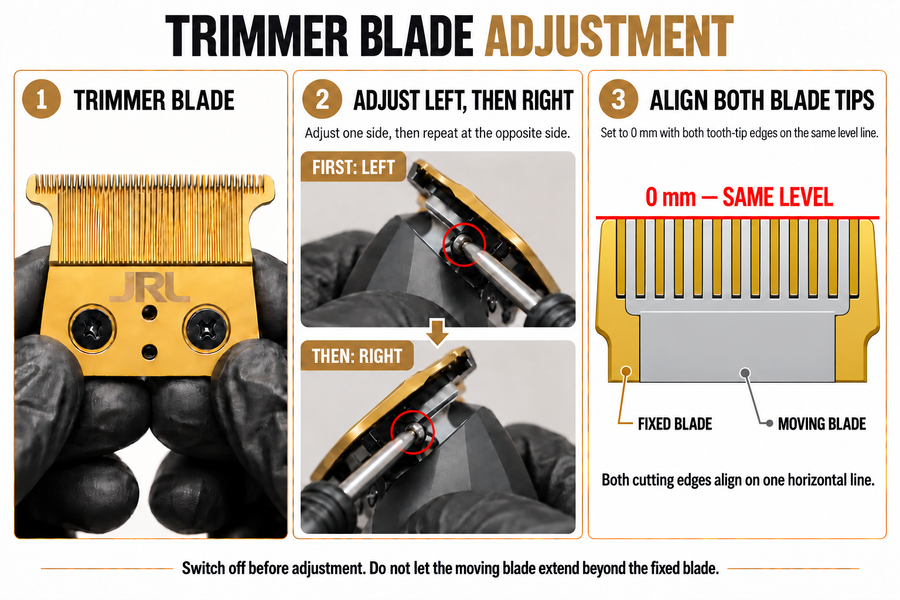
Not automatically. Extremely close blade settings require care and may irritate or nick skin if misadjusted.
Continue your guide
Put the guide into practice
Compare current clippers and check the selected option, product specifications and included accessories. For a coordinated setup, build your kit and change or remove any recommended tool.